From Chalkboard to Handout: How Training Aids Changed What Learners Could Revisit
See how the chalkboard-to-handout shift changed what learners could revisit, and choose materials that preserve local knowledge beyond a rural training session.

When a rural training session ends, what can a learner still refer to: the group’s shared notes, or a record they can take away? The chalkboard-to-handout shift changed that choice. A board holds ideas in the room; a printed sheet can carry selected information elsewhere.
That change is less a story of one format replacing another than of teaching aids taking on different jobs. Chalkboards, flip charts and printed pages each shape what a group can see, contribute, correct and revisit. Knowing those differences helps trainers decide what belongs on display and what deserves a lasting record.
Ideas on display
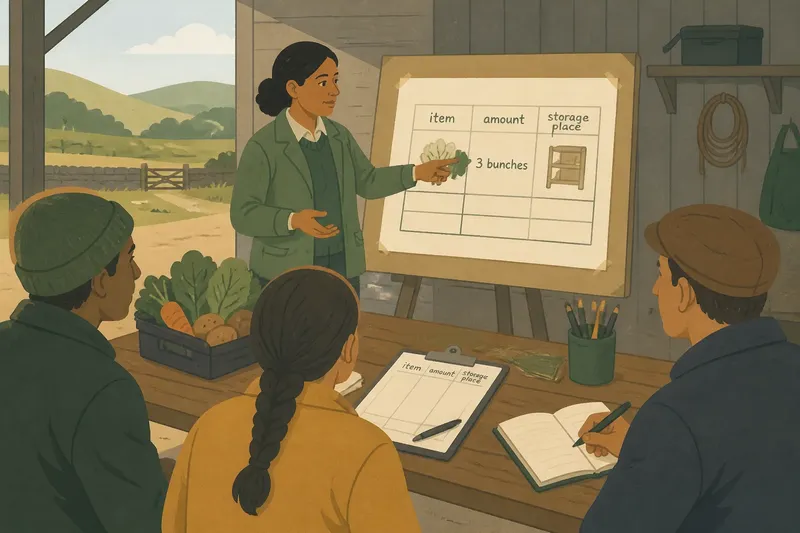
A chalkboard makes the developing explanation visible to the group. A trainer can write a local term, sketch a process and change the order as learners respond. The board records the discussion as it happens, not just a prepared answer.
Flip charts and wall charts extend this shared display in different ways. A flip chart lets the trainer turn back to earlier pages; a wall chart keeps selected information in view during an activity. Both can help a group compare contributions without asking each learner to follow a separate document.
The limits follow from the setting. A board can be hard to see from some seats, and erased notes are no longer available to someone who arrives late. A wall chart stays in the room, while a flip chart still depends on the trainer bringing and displaying it.
Portable records
A handout changes the point of reference. Learners can keep a copy and consult it away from the training space, at a time that suits them. That is useful for material they may need to recall after discussion has finished.
Portability also changes what the page must do. A board can depend on the trainer’s explanation and gestures; a handout needs enough context to make its purpose and organisation clear on its own. Headings, labelled illustrations and familiar terms help readers find the relevant point.
A printed page does not preserve every useful part of a session. It may leave out the questions, local knowledge and disagreement that shaped the group’s understanding. Treat print as a selective record, not a substitute for participation or a transcript of everything said.
From display to record
The shift from chalkboard to handout changed how information could be revisited, but it did not make the newer format universally better. A shared surface is suited to ideas the group needs to build or compare together. A portable sheet is suited to selected information an individual may need to look up later.
It also changed how errors travel. A trainer can correct a board in front of the group, making the change visible. An unclear statement on a handout may be carried away unchanged, so check wording and labels before copying it. If a sheet needs revision, mark the corrected version clearly rather than relying on an oral correction that future readers may never hear.
For rural adult learning, the distinction can protect local contributions from being flattened into a generic page. Use the board to collect terms or questions that matter to the group. Then decide which points need to be kept in a portable record, and which are best left as part of the shared conversation.
Choosing a useful format
Start with the point at which learners need the information. If they need to shape an idea together, use a board or flip chart. If they need a selected reminder away from the session, consider a handout. A wall chart may suit information that needs to stay visible in a shared learning place.
- Group contributions: Check whether learners need to add or revise ideas together; if they do, use a chalkboard or flip chart, but if they need a fixed reference, prepare a separate record.
- Later reference: Check whether the information will be needed outside the room; if so, make a portable sheet, but if not, keep it on a shared display.
- Local language: Check whether key terms vary between learners; if they do, record and clarify the terms with the group before deciding what belongs on a handout, but if they are already understood, keep the page concise.
- Diagram visibility: Check whether everyone can read the labels from their seat; if not, enlarge the shared diagram or provide a closer copy, but if they can, keep one display for discussion.
- Access to copies: Check whether every learner can take and keep a sheet; if not, leave a wall chart available or arrange another shared record, but if copies are accessible, use print for material that must travel.
- Reading confidence: Check whether the page makes sense without spoken explanation; if it does not, simplify the wording and discuss it aloud, but if it does, use it as a reference rather than adding unnecessary text.
Say you are planning an invented session about recognising signs of a crop problem. Your starting point is a group that needs to compare visible changes together, while a later reminder would be useful away from the meeting room. First, sketch a leaf on the chalkboard and invite learners to name and locate the changes they recognise. Next, record the agreed terms and any points that need local judgement, without presenting the drawing as a diagnosis. Then prepare a concise sheet with the labelled sketch and prompts to observe and seek appropriate local advice when uncertain. The resulting trade-off is clear: the board supports shared discussion, while the sheet preserves a portable reminder without pretending to replace judgement.
Format questions?
When is a chalkboard more useful than a handout?
Use a chalkboard when learners need to contribute to a shared explanation or see ideas take shape. Choose a handout instead when selected information must remain available outside the room.
What belongs on a portable training aid?
Include the purpose, clear headings, labelled visuals and enough context for a reader to understand the page without the trainer beside them. Leave out discussion details that do not help the learner use the material later.
Can a wall chart replace individual copies?
A wall chart can keep a shared reference available in the learning space when individual copies are not practical. It cannot travel with learners, so use another format if they need the information elsewhere.
How can trainers preserve local contributions?
Write unfamiliar or locally specific terms where the group can see them, then check their meaning with the people who use them. Include them on a handout only when they will help readers beyond the session and can be explained clearly.
Records that last
The chalkboard-to-handout shift expanded what learners could revisit, but a portable record works only if its limits are clear. Read the page as someone who missed the discussion would. If a term, diagram or decision depends on local context, say so rather than implying that the sheet contains the whole answer.
Before printing or displaying a final version, check that it distinguishes agreed information from open questions and points readers towards a suitable source when details depend on a product label, manufacturer instructions or local rules. The useful record is not necessarily the fullest one; it is the one that lets a learner see what the group established and where further judgement is needed.