Demonstration First or Instructions First?
Demonstration first or instructions first? Match the teaching order to learners’ familiarity and the task’s decision points, so everyone can follow and refer back.
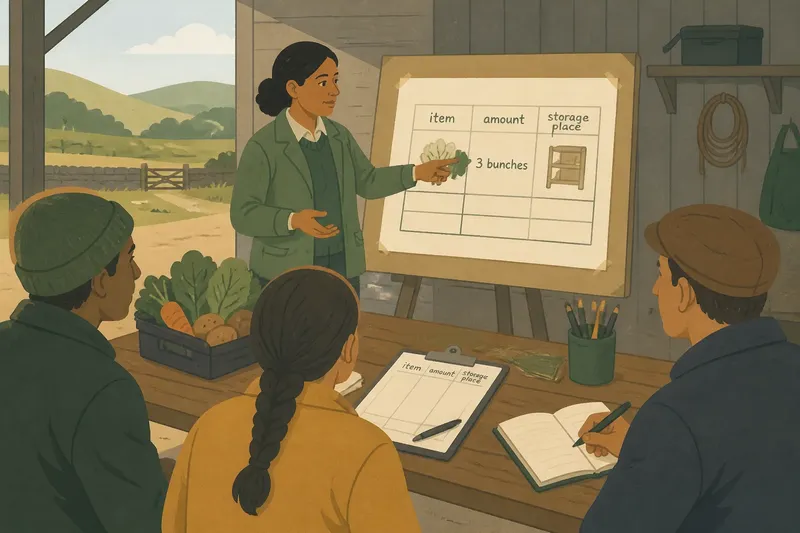
Should you demonstrate first or give instructions first? For a practical lesson, demonstration first or instructions first depends on what learners need to notice before they act: a physical detail, a decision rule, or the purpose of an unfamiliar item. Plan the order around that point, not a general teaching sequence.
A useful test is to ask what learners might miss if you begin with the other option. A quick demonstration can make a hidden detail visible. Concise instructions can direct attention to a rule that would otherwise be easy to overlook.
Demonstration first
Demonstrate first when the task’s defining feature is visible in the action: the angle of a tool, the position of a part, or the appearance of a finished result. Show only the part learners need to inspect, and place materials where everyone can see them.
For example, when showing how to secure a simple knot in a length of cord, hold the cord against a contrasting surface and pause when the crossing point is visible. Then name the parts and explain what to check before pulling it tight. If learners cannot see the crossing point, change the viewing position or use a larger cord; repeating the same obscured movement will not solve the problem.
Demonstration first is less useful when the main challenge is deciding which action is appropriate. A smooth performance may hide the reasons behind each choice. In that case, state the decision rule before showing how it guides the action.
Instructions first
Give instructions first when learners need a criterion to watch for, or when an item’s purpose is not obvious. Keep the directions brief and concrete. Use the same names for tools and materials that appear on the table and in any handout.
For a storage-label task, explain that the label must identify what is in the container and when it was prepared. Then demonstrate where those details go and how to keep the writing legible. The opening gives learners a reason to attend to the layout rather than simply copy the movement.
Instructions first also make sense when learners need an access or safety explanation before an activity begins. Give general guidance before handling equipment, follow the maker’s instructions and local rules, and ask a suitably qualified person to lead work that requires specialist training.
Sequence by attention
Choose the order by identifying the detail that deserves attention before learners practise:
- Visible movement: If learners must notice hand position or tool placement, demonstrate that detail first; if the view is blocked, reposition people or provide a clear alternative.
- Decision rule: If learners must choose between options, explain the cue first; if they still cannot apply it, pause the demonstration at the choice and talk through the cue.
- Unfamiliar material: If an object’s purpose is unclear, name it and explain its role before use; if the term is unfamiliar, point to the item and use the locally understood name as well.
- Recall after class: If learners will need the sequence later, provide a plain-language prompt sheet; if its wording differs from the demonstration, revise the terms before handing it out.
- Limited visibility: If some learners cannot see the key detail, change the position or make the demonstration accessible another way; if neither is possible, do not rely on sight alone.
- Many decision points: If the task contains several choices, break the demonstration into sections; if learners lose the thread, stop and explain one decision before continuing.
These checks help you distinguish a task that needs watching from one that needs a rule, while leaving room to combine the two when both matter.
Questions about order?
Should I show the finished result first?
Show it first if recognising the goal will help learners understand the actions. If the result could be mistaken for something else, name its important features before demonstrating how to make it.
How long should instructions be?
Give only the information learners need to watch or begin safely. Put later details on a prompt sheet or explain them at the point where they affect a decision.
What if learners use different terms?
Say the term used on the handout, then connect it to the word learners know locally. Keep both terms consistent throughout the explanation so people can match speech, materials and print.
What if a demonstration is not accessible?
Use another way to convey the same essential detail, such as a spoken description, a large diagram or a tactile model where appropriate. Check that the alternative makes the decision or action clear rather than merely repeating the topic.
Worked planning example
Imagine you are preparing a session on entering a produce collection in a shared paper ledger. The hypothetical starting point is a blank ledger with columns headed “item”, “amount” and “storage place”; learners recognise the produce but have not used this form. The main challenge is matching each detail to the correct column, not handling a tool.
First, explain what the three headings mean, using the words printed on the page. Next, fill in one invented sample entry while pointing to each heading and pausing before writing each detail. Then give learners a blank copy and ask them to identify which column would hold a named item’s storage place before they complete an entry. The expected observable result is that they can point to the right column and explain their choice. If they point to different columns, return to the heading meanings before asking them to write.
This order puts the decision rule ahead of the demonstration because the headings are the task’s central challenge. If learners already understood the columns but struggled with handwriting or page layout, you could instead demonstrate a clear entry first and then provide the written prompts.
Adapt the setting
In a draughty shed or outdoor space, use a clipboard or a board to keep a prompt sheet still. Place small items against a contrasting background. If noise makes spoken directions hard to hear, give learners a printed copy and point to each relevant line as you speak.
Check that the handout, spoken explanation and materials use matching names. Where reading comfort or language varies, explain unfamiliar words aloud and allow learners to ask about them without putting anyone on the spot.
For demonstration first or instructions first, focus on the detail learners must notice before acting. If it is visible, show it clearly; if it is a rule or choice, explain it before asking them to watch. That small distinction helps you plan a lesson around the actual work rather than the trainer’s preferred routine.